
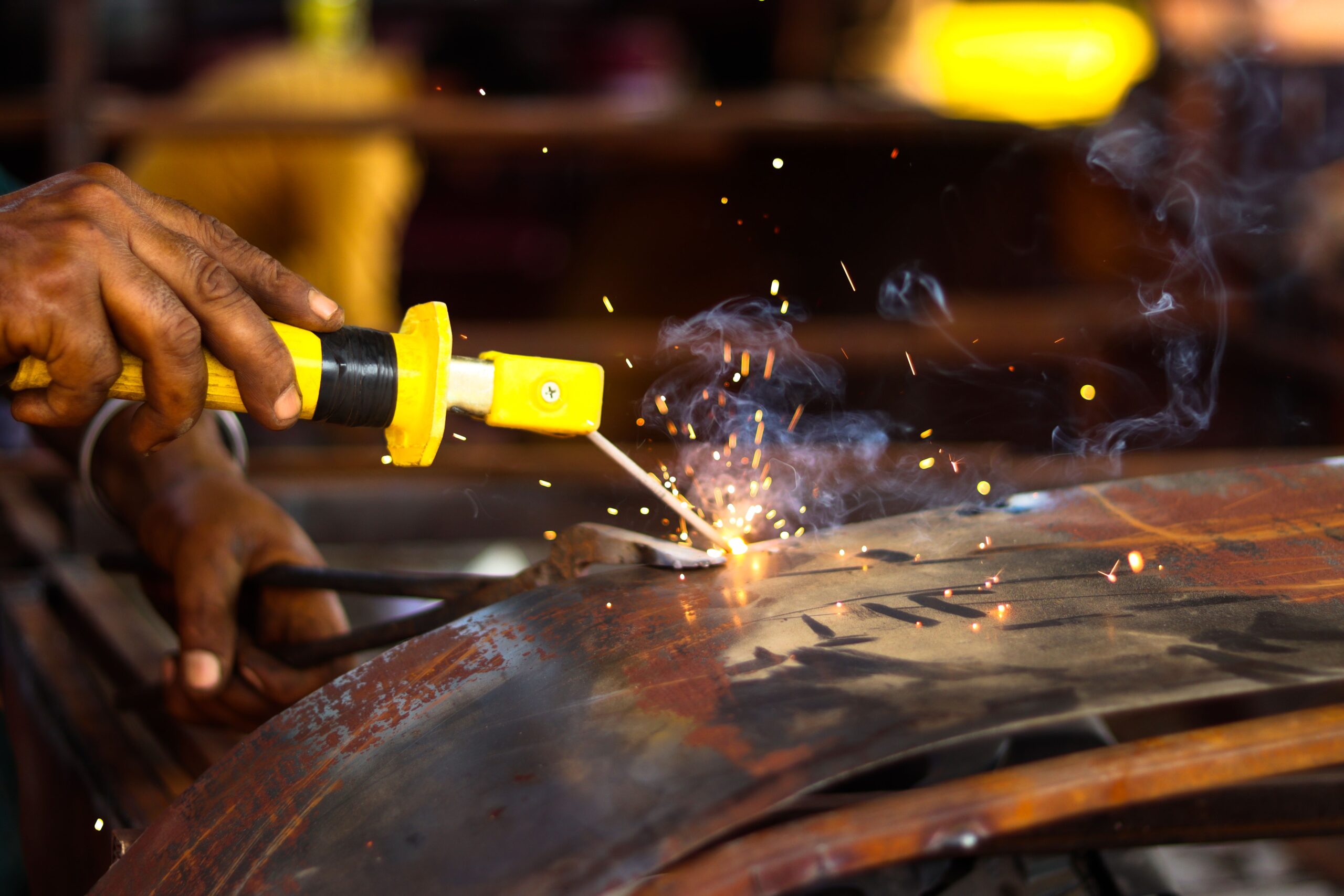
The Most Overlooked Welding Accessories That Improve Productivity
When welders look for ways to improve productivity, the first things that usually come to mind are the welding machine, amperage, or duty cycle. But in our experience at Arc Solutions, the equipment around the machine can have just as much impact on how efficiently a shop operates. The right welding accessories can make setup easier, improve consistency, reduce operator fatigue, and help prevent unnecessary equipment issues.
From MIG guns and ground clamps to fixturing, anti-spatter products, and replacement consumables, these are some of the welding tools that can make a noticeable difference on the shop floor.
Start With Better Fixturing and Setup Tools
Getting the material positioned correctly before you start welding can save a surprising amount of time. Strong Hand Tools, welding tables and table accessories are good examples of equipment that can make setup easier while improving the overall quality of the finished weld.
Weld dogs are especially helpful when working with steel plates and pipes. They make it easier to align and level pieces so you can get a tight, accurate fit before tacking. That means less time fighting material that has shifted out of position and less rework later.
Magnetic welding squares and welding magnets are useful for the same reason. They help hold joints where you need them while setting angles or tacking inside and outside corners. For jobs that require frequent setup and repositioning, having the right fixturing tools close by can make the process much smoother.
Choose a MIG Gun That Fits the Job
A MIG gun gets a lot of use in most welding shops, but it is easy to overlook when equipment needs to be replaced or upgraded. The right MIG welding gun should be chosen based on how and where it will be used.
Start with the basics: make sure the gun’s amperage and duty cycle are appropriate for the welding machine and the application. From there, consider whether an air-cooled or water-cooled gun makes more sense, how much cable length the operator actually needs, and how comfortable the gun is to use throughout a shift.
Operator comfort is worth paying attention to. A gun that feels awkward or is heavier than necessary can become tiring over several hours of welding.
A worn MIG gun can also create problems that aren’t always immediately obvious. Poor wire feeding, inconsistent weld quality, and increased consumable use can all point to a gun or one of its components that needs attention. Catching those issues early can save time and keep a small problem from turning into a frustrating interruption in production.
Don’t Underestimate the Ground Clamp
The ground clamp may be a small part of the setup, but it can have a big effect on how a weld runs. A weak connection can lead to excess spatter, lack of fusion, and porosity. Poor conductivity can also cause an unstable arc, voltage drop, and overheating.
If the arc doesn’t seem to be running consistently, the ground connection is one of the first things I would check. Make sure the clamp is in good condition and is making solid contact with clean metal. A good connection helps the welder maintain a steady arc and can prevent problems that might otherwise be blamed on the machine or settings.
Inspect Cables and Connectors Every Day
Welding cables don’t have an easy life. They get dragged across the floor, moved around workpieces, and exposed to heat and sparks throughout the day. Over time, that can lead to cuts, scrapes, and burns in the outer jacket.
Once the insulation is damaged and the copper wires are exposed, the cable becomes a safety concern and may not perform properly. That’s why we recommend making cable and connector inspection part of the daily routine. If you find visible damage, don’t ignore it and hope it holds up for another job. Addressing it early is much better than dealing with a safety issue or equipment failure later.
Keep the Right MIG Consumables on Hand
A missing contact tip or damaged nozzle is a small problem until it stops a job. Keeping common MIG consumables at the workstation makes it much easier to get back to work without waiting for a replacement.
We recommend having contact tips, gas nozzles, gas diffusers, spare gun liners, and extra welding wire available.
It’s also important to know what wear looks like. A contact tip should be replaced when the opening starts to look oval or the wire moves from side to side while welding. On a nozzle, look for heavy spatter buildup or physical damage. A liner that is causing wire-feeding problems or bird-nesting is another sign that it’s time for a replacement. For gas diffusers, check for blocked gas holes, damage, or loose threads.
One of the easiest ways to get more life out of consumables is also one of the simplest: clean them regularly. Waiting until a part is heavily worn or clogged usually creates more problems than it solves. Over-tightening components can cause unnecessary damage as well, so parts should be secured properly without forcing them.
Use Anti-Spatter Before Cleanup Becomes a Problem
Anti-spatter spray is one of those products that’s easy to overlook until you’re stuck cleaning spatter off a workpiece. Applying it before welding helps keep spatter from sticking to the metal, which can make cleanup much faster afterward.
We also recommend keeping nozzle dip or spray and a pair of MIG pliers, or welpers, at the welding station. Having them nearby makes it easier to clean the nozzle as needed instead of letting spatter build up and interfere with the gun.
Helmet cheater lenses are another accessory that doesn’t always get enough attention. For welders who need a little magnification to see the joint and puddle clearly, the right lens can make detailed work much easier. Better visibility can mean better control, particularly on smaller or more precise welds.
Build the Station Around the Work
Every welding station is a little different, so the right combination of accessories depends on what you’re building, the materials you’re working with, and the type of welding being done.
A good starting point is a welding table and fixturing that fits the application, the tooling needed for the job, and the appropriate PPE. Then look at where time is being lost. If the same setup, cleanup, or changeover tasks keep interrupting the work, those are good places to look for better tools.
For shops focused on reducing downtime, we often recommend looking at quick-change consumables, anti-spatter products, multifunction welding tools, and Strong Hand tables and fixturing. The goal isn’t to add more equipment just for the sake of it. It’s to have the right equipment available when it’s needed.
Make Maintenance Part of the Routine
Keeping welding equipment in good shape doesn’t require an elaborate maintenance program. Cleaning parts, storing accessories properly, and taking a few minutes each day to inspect the equipment can go a long way.
A quick check can catch a damaged cable, worn contact tip, clogged gas diffuser, or MIG gun issue before it affects the job. Those small checks are much easier to deal with than an unexpected problem in the middle of production.
For us at Arc Solutions, improving welding productivity isn’t always about buying a bigger or more powerful machine. Sometimes it’s about fixing the small things that slow a welder down.
The right welding accessories can make setup easier, keep equipment running properly, and reduce time spent on cleanup and troubleshooting. A dependable MIG welding gun, solid ground clamp, properly maintained cables, quality fixturing, magnetic welding squares, anti-spatter products, and fresh consumables all have a role to play.
When choosing welding tools, we recommend starting with the problems you’re actually seeing in the shop. If a particular accessory saves setup time, prevents a recurring issue, or makes the welder’s job easier, it’s probably earning its place at the station.
Back to blog