Welding Rods Explained: How to Choose the Right Electrode for Every Job
When it comes to stick welding, choosing the right welding rod is just as important as having the right machine. Even experienced welders know that using the wrong stick welding electrode can lead to poor penetration, weak welds, excessive spatter, or unnecessary rework. On the other hand, matching the right rod to the material, joint, and welding position makes the job smoother and produces a stronger finished weld.
At Arc Solutions, we talk with welders every day, from first-time hobbyists to seasoned fabricators, and one thing is consistent: success starts with selecting the right welding consumables before striking an arc.
In this guide, we’ll break down the most common welding rods, explain what their classifications mean, discuss real-world applications, and help you avoid the mistakes we see most often.
Start with the Job, Not the Rod
A question we hear all the time is, “What’s the best welding rod?” The honest answer is: it depends.
There isn’t one rod that’s right for every project. The best choice comes down to what you’re welding and the conditions you’ll be working in.
Before you pick up a box of electrodes, think about a few basics:
- What type of metal am I welding, mild steel, stainless steel, cast iron, or something else?
- How thick is the material?
- Will I be welding flat, vertical, overhead, or in another position?
- How much penetration does the weld need?
- Is my machine AC, DC, or capable of both?
In our experience, getting those answers first makes choosing the right welding stick much easier. When the rod matches the material, the weld position, and the capabilities of your machine, you’re setting yourself up for a cleaner weld with fewer headaches.
Understanding Common Stick Welding Electrodes
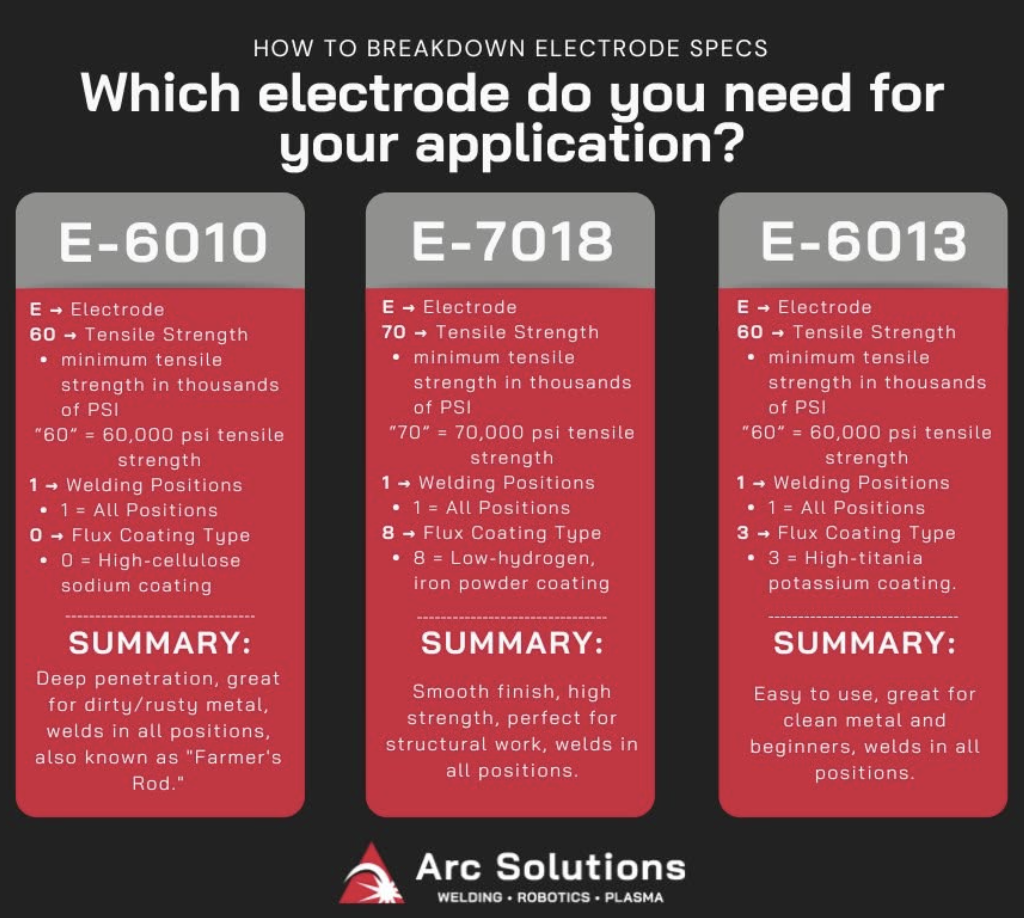
If you’ve ever looked at a box labeled 6010 or 7018 and wondered what all those numbers actually mean, you’re not alone. Every electrode is designed for a specific purpose, and knowing the basics can save you a lot of frustration.
| Electrode | Common Uses | Why Welders Choose It |
| 6010 | Pipe welding, root passes | Excellent penetration, DC only |
| 6011 | Repairs on rusty or dirty steel | Penetrates through mill scale and runs on AC or DC |
| 6013 | Light fabrication, thin material, general repairs | Easy to run with a smooth, clean-looking bead |
| 7018 | Structural steel and heavy fabrication | High-strength, low-hydrogen welds with excellent mechanical properties |
The differences go beyond the number stamped on the rod. Every electrode has its own alloy composition, tensile strength, operating characteristics, and recommended procedures. Some are built for deep penetration, while others prioritize appearance, strength, or ease of use.
We see certain rods come up again and again depending on the job:
- 6010 remains a go-to for pipe welders because it digs deep and performs well on root passes.
- 6011 is a favorite for farm repairs and maintenance work since it can handle dirtier steel without extensive prep.
- 6013 is often where new welders start because it’s forgiving and produces a nice-looking bead.
- 7018 is the standard for many structural applications where weld strength and reliability matter most.
The key is matching the electrode to the work you’re doing instead of trying to make one rod handle every situation.
What Makes a Welding Rod “Good”?
Ask ten experienced welders what they look for in a welding rod, and you’ll probably hear the same answer: consistency.
A quality electrode should strike easily, maintain a stable arc, and produce predictable results from the first rod to the last. It should also come with clear manufacturer specifications, so you know exactly how it’s intended to perform.
That’s one reason we typically recommend sticking with trusted manufacturers instead of simply buying the cheapest option on the shelf. Quality welding consumables tend to produce better welds, reduce rework, and make the overall welding experience much more enjoyable, especially when you’re working on projects where reliability matters.
The Most Common Mistakes We See
After helping thousands of customers choose welding rods, we’ve noticed that most welding problems don’t start when you strike an arc, they start when the wrong rod gets picked in the first place.
Here are a few mistakes we see over and over.
Using the Wrong Rod Angle
Even if you’ve chosen the correct electrode, the weld can still suffer if you’re holding the rod at the wrong angle. Different joints require different travel angles, and changing that angle can affect penetration, bead appearance, and overall weld quality.
Choosing the Wrong Diameter
Another common mistake is grabbing whatever rod diameter happens to be on the shelf.
Rod size should match the thickness of the material you’re welding. Smaller diameter rods are easier to control on thinner steel, while thicker material usually calls for a larger rod that can lay down more filler metal efficiently.
Forgetting About Polarity
Not every electrode is designed to run on the same current.
Some rods are intended for DC+, while others will run on AC, DC, or both. We regularly talk with customers who are having trouble with an electrode, only to discover it’s simply being used with the wrong polarity.
A quick look at your machine’s settings before you start can save a lot of frustration later.
Don’t Forget About Your Welding Machine
Your welding machine plays a much bigger role in electrode selection than many people realize.
Before buying rods, make sure you know:
- Whether your machine runs AC, DC, or both
- Its available amperage range
- Which polarity settings it offers
- Whether the machine has enough output for the job you’re doing
For example, if an electrode is designed to run on DC and your machine only provides AC, you’re probably not going to get the results you’re expecting.
Choosing the right rod isn’t just about the metal you’re welding, it’s also about making sure your machine can run that electrode the way it was designed.
Choosing the Right Rod Diameter
One of the questions we hear most is:
“What size welding rod do I need?”
There’s no single answer because it depends on the material you’re welding.
As a general rule, thinner materials are easier to weld with smaller diameter rods, while thicker steel usually benefits from larger electrodes that can deliver more filler metal and deeper penetration.
Another question that comes up often is amperage.
For example, a 1/8-inch 7018 electrode is commonly run somewhere between 90 and 160 amps, although you should always follow the manufacturer’s recommendations for the specific rod you’re using.
Don’t Overlook Storage
Good welding rods can become bad welding rods if they aren’t stored properly.
One of the biggest mistakes we see is leaving electrodes exposed to the air. Over time, moisture can work its way into the flux coating, especially on low-hydrogen rods like 7018, and that can lead to weld defects.
We’ve also seen rods tossed into toolboxes or buckets where the flux gets chipped or cracked before they’re ever used.
Keeping your welding consumables clean, dry, and stored in the proper container goes a long way toward producing consistent welds.
A Few Welding Rod Myths Worth Clearing Up
Some misconceptions just refuse to disappear.
“Stick welding is outdated.”
Not at all. Stick welding is still one of the most dependable processes for structural work, field repairs, construction, pipe welding, and countless other applications where reliability matters.
“You can’t weld sheet metal with stick.”
You can, it simply takes the right electrode, proper machine settings, and a little more patience than MIG welding.
“If a rod gets damp, it’s automatically ruined.”
That’s not always true. Depending on the type of electrode and the manufacturer’s recommendations, some rods can be properly dried and returned to service. The important thing is following the manufacturer’s guidelines instead of assuming every rod should either be reused or thrown away.
Different Jobs Call for Different Electrodes
One reason there isn’t a “one-size-fits-all” welding rod is because every application asks something different from the weld.
For example:
- Pipe welding often relies on 6010 because of its deep penetration and excellent root pass performance.
- Structural steel fabrication commonly uses 7018 for its strength and low-hydrogen characteristics.
- Stainless steel fabrication requires stainless-specific electrodes designed for corrosion resistance.
- Hard-surfacing and wear applications use specialty consumables built to withstand abrasion and heavy use.
Trying to use one electrode for every project usually creates more problems than it solves.
Buying Welding Rods for the First Time?
If you’re just getting into stick welding, don’t feel like you need to buy every type of rod available.
For most people, starting with mild steel and a quality 6000- or 7000-series electrode is the best place to learn. As your skills grow and your projects become more specialized, you can branch out into rods designed for stainless steel, cast iron, hard surfacing, and other applications.
Just as important as what you buy is where you buy it. Working with an experienced distributor means you can ask questions before spending money on the wrong consumables. A five-minute conversation can save hours of frustration once you’re in the shop.
Find the Right Rod for Your Next Project
Choosing the right welding rods doesn’t have to be complicated. Once you understand how your material, welding position, machine capabilities, and electrode selection all work together, picking the right rod becomes much more straightforward.
Whether you’re repairing farm equipment, welding pipe, or fabricating structural steel, the right welding consumables make the job easier and help produce better results from the first pass to the last.
Shop Welding Rods & Consumables
Looking for the right electrode for your next project?
Browse our Welding Consumables Collection to compare trusted brands for every application. If you’re focused on stick welding, check out our Stick Welding Products collection to find the right rod for your material and machine. And if you’re still deciding which welding process makes the most sense for your work, be sure to read our related guide, MIG vs. TIG – What We Actually Recommend.
Back to blog